I Recorded My Family's Everyday Life for 30 Days. Here's What I Discovered About the Memories We Forget to Preserve.
It was a Sunday evening in late July when the question finally cornered me. My son was asleep, the laundry had been pushed to one corner of the sofa, and I was holding a mug of lukewarm tea, speaking to my mum on the phone. She lives 150 miles away and loves her grandson fiercely. "So, Joe," she asked warmly, "how was your week? What have you all been up to?"
I paused. I stared at the ceiling for four seconds. And then, like I had done almost every Sunday for the past five years, I gave the universal answer of exhausted parents everywhere:
"Oh, you know... busy as usual. Not much happened really. Just the usual juggle."
As soon as the words left my mouth, a quiet wave of discomfort washed over me. Because it was completely, undeniably untrue.
A hundred extraordinary things had happened in our house between Monday morning and Sunday night. My five-year-old had delivered a twenty-minute passionate monologue about why bananas shouldn't have strings. My partner and I had dissolved into helpless, tearful laughter over an incinerated frozen pizza on Thursday. My son had staged an impromptu dramatic opera for the cat in the hallway, and earlier that week I had watched him gently hand his favourite toy car to a crying toddler in the park.
Yet standing there on Sunday evening, my mind was an absolute blank. The week had dissolved into a generic blur. Even worse: I had taken 37 photographs on my iPhone over those seven days. When I unlocked my screen and scrolled through them, I felt none of the richness. There was a photo of my son on the swings. A picture of a parking ticket receipt. Three blurry shots of pasta.
The photos showed what things looked like from the outside. But they were completely silent. They contained none of the voices, none of the jokes, none of the atmosphere, and none of the heart.
The Family Memory Paradox
Parents take more photographs today than at any point in history, yet many of us feel less connected to the everyday memories behind them. We capture thousands of visual snapshots while the actual texture of everyday family life evaporates into thin air.
Cloud storage of 15,000 silent photos, staged milestone portraits, and school calendar notifications.
Children's voices, invented words, bedtime debates, inside jokes, and the real atmosphere of our homes.
The 30-Day August Experiment
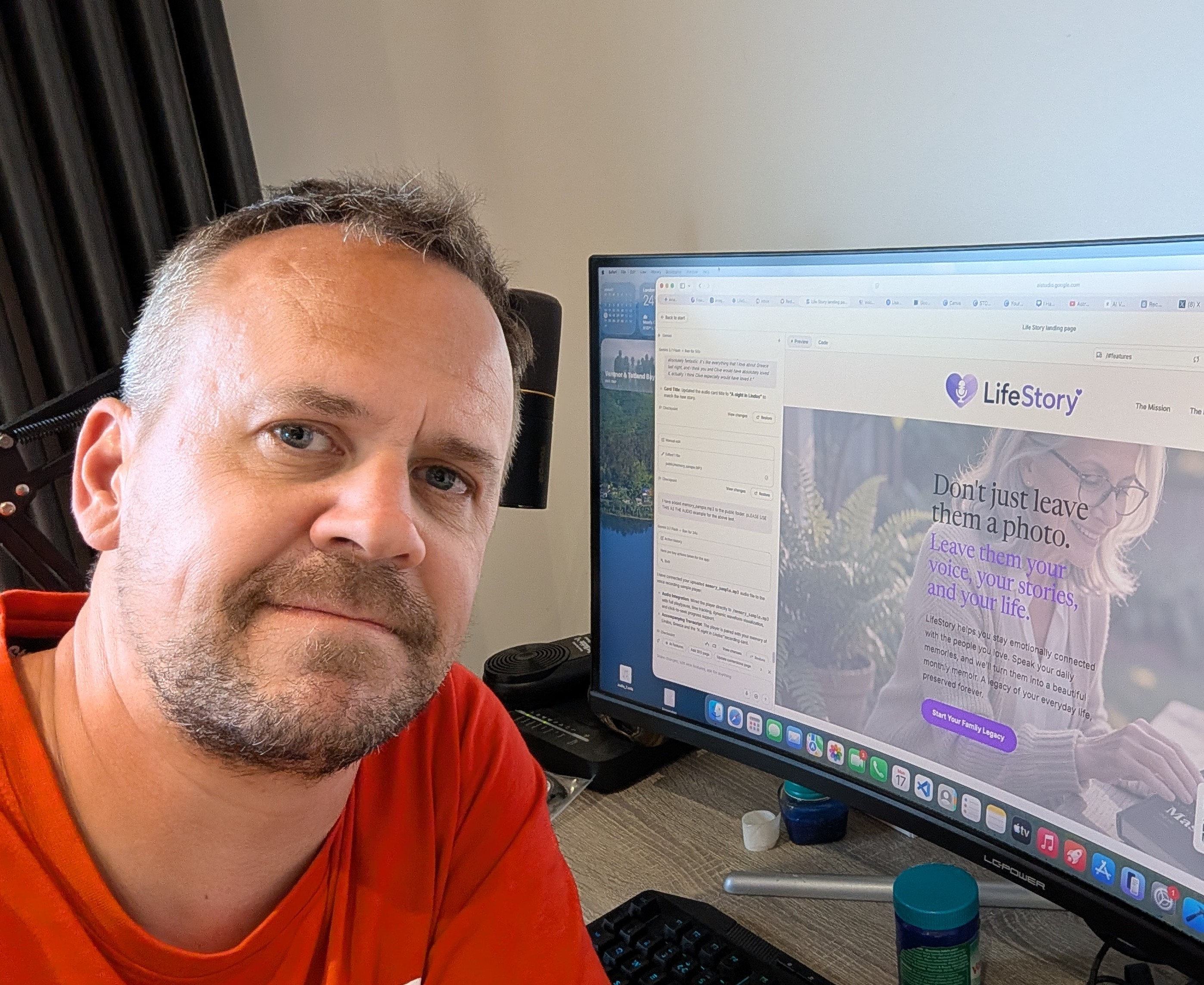
As the founder of LifeStory, I had spent months designing an iOS application specifically created to help people record their memories using their voice. But there is a massive difference between building software and living inside it every single day.
So for the whole of August, I set myself a strict personal challenge. No excuses, no shortcuts, and no milestone hunting:
- Rule 1: No written journaling. If capturing a memory required sitting down at a desk with a notebook at 10:30 PM, I knew I would quit by Day 4. Spoken audio notes only.
- Rule 2: A strict two-minute cap. No speechwriting, no rehearsal, no editing. Just open the app, tap record, and talk for 60 to 120 seconds.
- Rule 3: Zero milestone bias. I was expressly forbidden from waiting for "big events." The goal was to record the messy, domestic, unremarkable minutes that normally get thrown into the mental bin.
- Rule 4: The tangible test. At the end of the month, compile the spoken stories and candid photos into a finished monthly memoir, print/bind it, and hand it to my mum during her September visit.
You can see the raw timeline, listen to the audio clips, and inspect the finished pages on our dedicated August LifeStory experiment page. But here is what happened beneath the surface, and what those 30 days taught me about the way family memories actually work.
Week 1: Fighting the "Nothing Happened" Reflex
The first three days were surprisingly uncomfortable.
On Day 1, I sat in the car outside the supermarket with the engine running. I opened the app, stared at the microphone button, and felt a wave of self-conscious hesitation. "What am I supposed to say? My son had a meltdown over getting the wrong cup at breakfast, I answered 40 emails, and then we went to Sainsbury's. Nobody needs to remember that."
That hesitation reveals the fundamental trap of conventional journaling: we judge our memories before we have even saved them. We treat journaling like an audition for historical posterity. We think a day only counts if someone won an award, visited a monument, or experienced a profound philosophical breakthrough.
I forced myself to tap record and just talked for 75 seconds about the morning cup negotiation. I described the dramatic expressions on my son's face, his airtight logic about why a different cup tasted "sour", and how my partner and I exchanged that silent, telepathic "we have lost control of this household" glance across the kitchen counter.
Something fascinating happened when I spoke instead of writing. When you hold a pen, your inner schoolteacher wakes up. You worry about sentence structure, chronology, and whether your punctuation is tidy. But when you talk, your real voice takes over. You use your natural idioms. You laugh mid-sentence. You capture the emotional weather of the moment without even trying.
The Friction Equation
For me, writing a 200-word diary entry takes 10 to 15 minutes of dedicated concentration. Speaking 200 words takes 75 seconds while boiling the kettle. By removing the physical act of typing or writing, voice capture removes most of the friction that made me give up on journaling before. Learn more about the mechanics in our guide on how to voice journal.
Week 1: A Rooftop in Lindos and the Power of Unfiltered Audio
In the first week of August, our family spent a few days in Rhodes, Greece. On August 4th, we went into Lindos for dinner.
Lindos is breathtaking, narrow whitewashed lanes, cobblestones polished smooth by centuries of footsteps, and the illuminated ancient castle on the acropolis towering above the town against the dark Mediterranean sky. It was hot, vibrant, and packed with people. We found an open-top taverna on a rooftop terrace, sat beneath the stars, and had an extraordinary meal with grilled fish, local wine, and laughter.
Normally, this would be an occasion where I'd snap twelve photos of the castle, four photos of our plates, and maybe one smiling group selfie where someone's eyes were closed. And by November, those photos would be buried three hundred swipes deep in my camera roll.
Instead, while stepping away for two minutes, I opened LifeStory and spoke directly into my phone:
"We went into Lindos last night, which was absolutely amazing. And one of the most beautiful places I think I've been to. It was just stunning. It was very, very busy, as you can imagine, but it was just so picturesque. There was... The scenery was just absolutely fantastic. There was a castle in the background, loads of shops and restaurants, open-top bars, and we had a lovely meal on a rooftop terrace. Food was amazing. Drink. Just absolutely fantastic. It's like everything that I love about Greece last night, and I think you and Clive would have absolutely loved it, actually. I think Clive especially would have loved it."
Notice what happened in that short spoken note: I wasn't writing an article for a travel magazine. I was naturally speaking to my mum. I mentioned her partner Clive. I captured the ambient emotion while the breeze was still warm on my skin and the taste of the food was fresh in my memory.
When LifeStory's memoir engine processed that entry, it didn't sterilise it. It wove those spontaneous spoken words into a clean, warm narrative paragraph and paired it with the photo of the illuminated castle. That single entry became a permanent time capsule of that night.
Week 3: The Memories We Systematically Erase
By the third week, the habit had clicked. I was recording an average of 90 seconds a day, sometimes while walking between meetings, sometimes sitting in the garden after dusk, sometimes during breakfast prep.
And that was when the most startling insight of the entire experiment hit me:
The moments that define our family life are precisely the moments our brains are wired to throw away.
Human memory operates like an aggressive spam filter. To keep us sane and functional amidst the overwhelming cognitive load of parenting, our brains compress routine domestic days into generic categories. Breakfasts blur together. Bedtimes blur together. School runs blur together.
Unless something catches fire or someone breaks an arm, our brains label the day as "standard maintenance" and the specifics fade within days.
Here is what was actually in my recordings from Week 3:
- The ridiculous phrase my son invented when he couldn't remember the word for "escalator" ("the moving metal stairs that eat your shoes").
- The twenty-minute debate over whether our golden retriever understands English or just responds to enthusiastic head nodding.
- The specific way my son smells after spending three hours playing in damp grass: cold mud, laundry powder, and wool.
- A Tuesday morning where everyone woke up in a foul mood, only for the tension to snap when someone dropped an entire box of dry Cheerios and we all collapsed into helpless giggles trying to sweep them up.
None of those moments would have ever appeared on Instagram. None of them justified a formal photo album. Yet reading through them later, they hit me with ten times the emotional force of any staged family photoshoot. (For a deep dive on why visual archives fall short, read our analysis on why photos alone don't preserve memories).
Week 4: The Transformation into a Physical Memoir
On August 31st, the experiment wrapped. Over the month, I had accumulated:
Think about that math for a moment. Forty-two minutes of total talking across an entire month. That averages out to less than ninety seconds a day. It required zero evening sacrifice. It took less time than boiling a kettle or waiting for the toaster.
Then came the crucial step: putting it together into something physical.
We fed the raw spoken entries and candid photographs through LifeStory's memoir generator. We picked the Floral and Classic book layouts, warm typography, clean editorial margins, rich imagery, and chapter dividers. The resulting output was a bound, 60-page August Memoir PDF that looked like an artisan book from an independent publishing house.
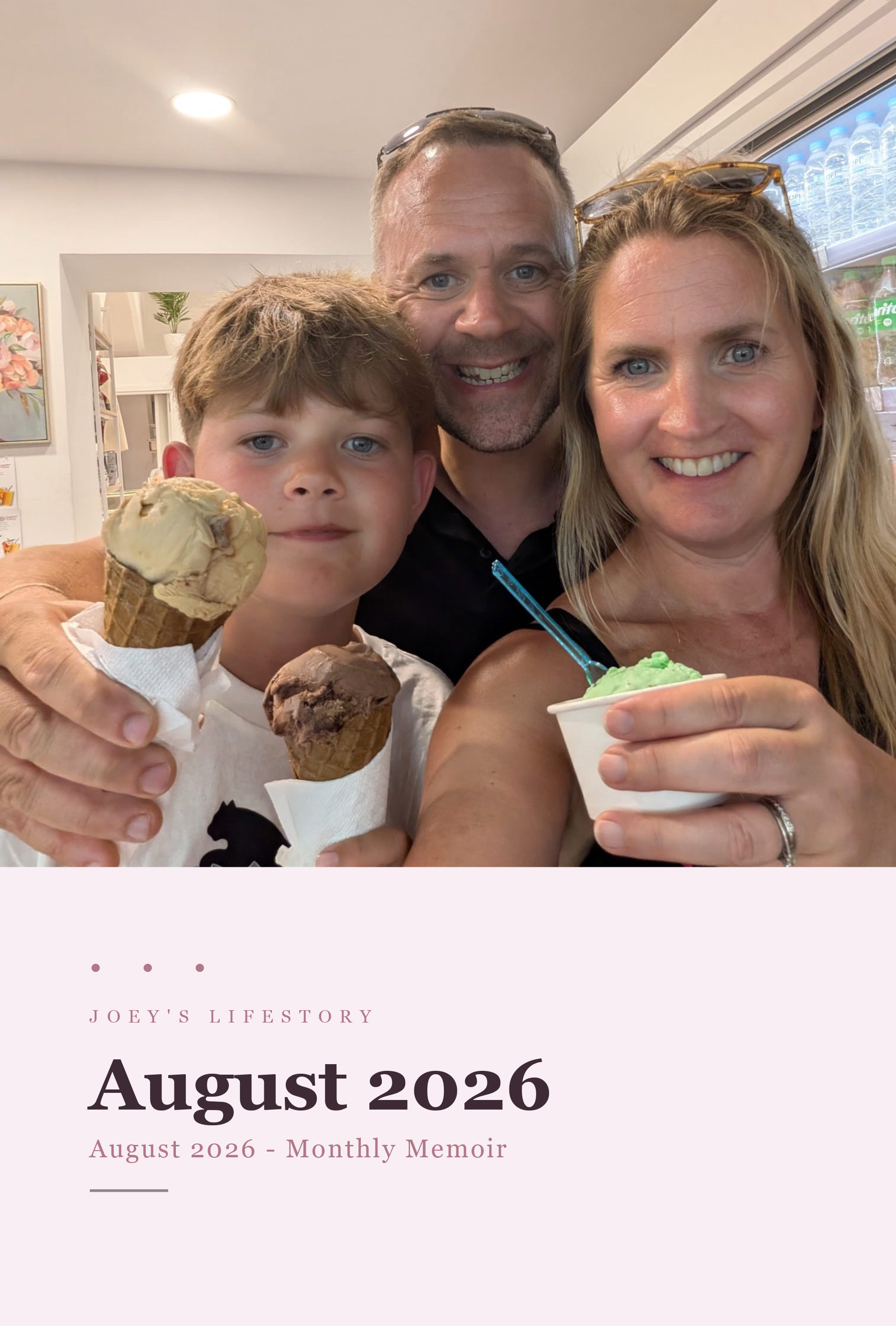
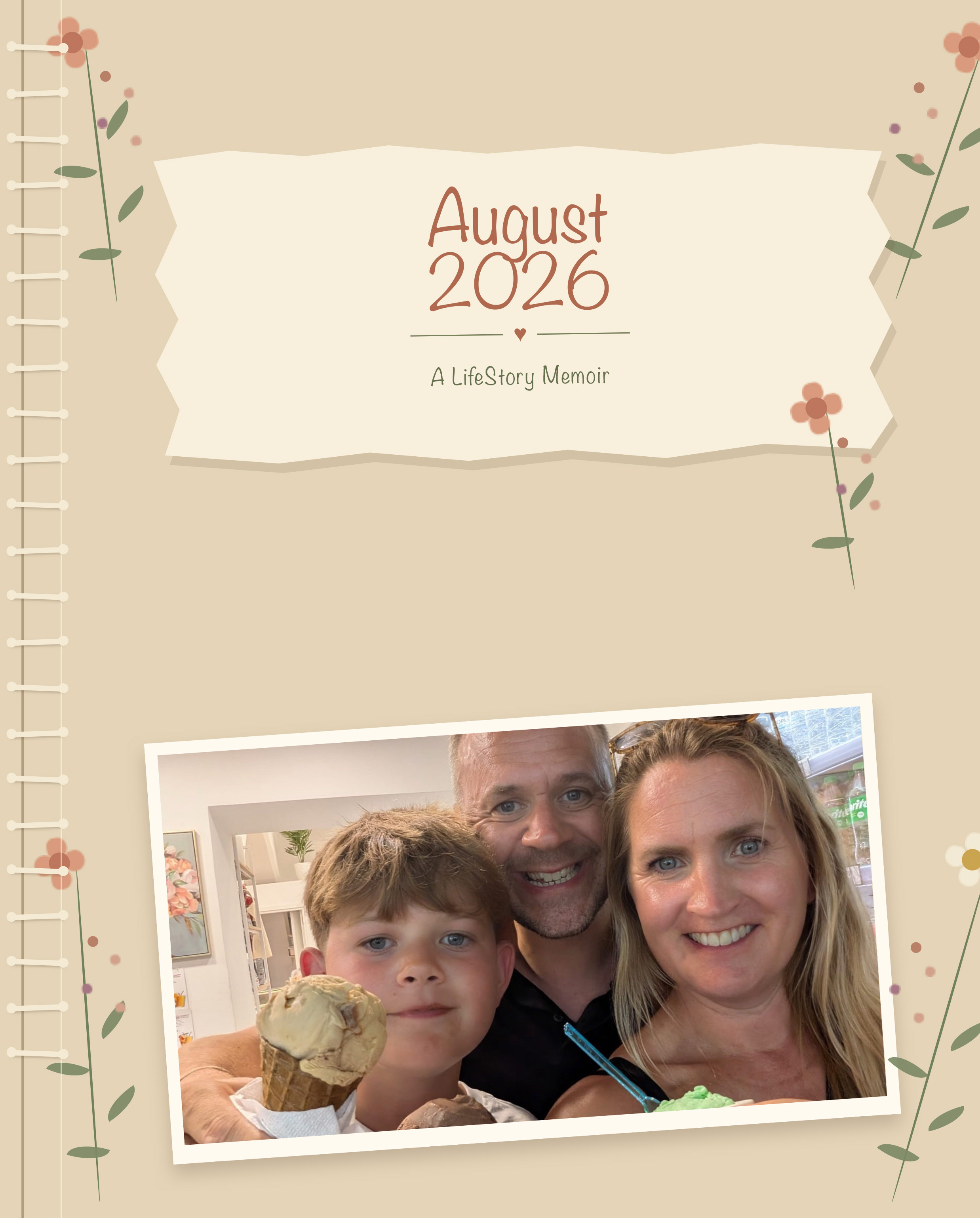
Real preview pages generated directly from the founder's August recordings. You can browse the complete layout on our August LifeStory experiment page.
Holding the finished pages on my screen, and later holding the bound physical proofs, gave me goosebumps. Because it didn't look like an administrative chore. It looked like an honest, humorous, and deeply moving portrait of our family in the summer of 2026.
September: Handing the Finished Book to Mum
The ultimate test of the experiment wasn't whether I liked the book. It was whether it bridged the emotional gap with my mum.
At the beginning of September, Mum came down to visit us. After dinner, when my son was tucked in, I handed her the finished August memoir.
I expected her to flip through it quickly like people do with photo albums, looking at the pictures, commenting on how big he looks, and closing it after three minutes.
Instead, she sat in the corner of the sofa with her reading glasses on for nearly forty minutes. She read every single page.
"The month is complete, and all your daily moments have been woven together into this beautiful finished memoir. It felt like I was actually living in your house with you."Mum's reaction upon finishing the August Memoir
She laughed out loud at the Cheerios catastrophe. She paused at the Lindos rooftop entry and touched the page when she read the line about wishing she and Clive had been there. She read his funny quotes out loud to herself.
When she closed the book, she looked up and said: "Joe, on our Sunday phone calls, you always tell me nothing happened. But look at this. Everything happened."
That was the exact moment I knew LifeStory wasn't just another tech app. It solved the real, painful distance that exists between generations in modern families.
Five Things I Learned from 30 Days of Family Recording
If you take nothing else away from this experiment, here are the five core truths I discovered about how family memory works:
1. The moments you think are "too boring" will be your treasures in ten years
In twenty years, you won't care about the itinerary of your resort vacation. You will be desperately yearning to remember what your five-year-old's bedtime negotiation sounded like, what breakfast routines felt like, and what nicknames your family used. Document the mundane; the extraordinary takes care of itself.
2. If a system takes more than two minutes, you will quit
Parental burnout is real. Any journaling method that demands disciplined writing, neat penmanship, or sitting down at a desk will fail during the first difficult week. Low-friction voice notes eliminate the barrier between experiencing a moment and saving it.
3. Photos need stories to survive
A photo is a silent fossil. Without a story attached, future generations (and even your future self) will look at a photo and ask, "Where was this? Why were they laughing?" When you anchor a spoken story to an image, you give the photograph an everlasting voice.
4. Your voice carries emotion that typed words miss
When you speak, your cadence, tiredness, laughter, and affection are woven directly into the recording. Decades from now, hearing a parent's actual voice talking about their children's childhood is infinitely more precious than reading a sanitised diary entry.
5. Family memoirs bless both ends of the family tree
We usually think of family journals as keepsakes for our children when they grow up. But my August experiment proved that they are equally powerful for grandparents right now. They bridge the geographic distance and make aging parents feel woven into the daily tapestry of their grandson's life. (Explore our guide on how to record your parents' life stories for the opposite direction).
How You Can Run Your Own 30-Day Family Experiment
You don't need a special month or a major milestone to start. You can begin tomorrow morning with three simple commitments:
The 3-Step Starter Framework
Pick one anchor habit in your day
Don't try to record "whenever something happens." Attach it to an existing habit: while the morning kettle boils, while sitting in your car after school drop-off, or when locking the back door at night.
Answer one simple question out loud
Ask yourself: "What is one funny, weird, or small thing that happened in the last 24 hours that I will probably forget by next week?" Talk for 60 seconds.
Attach one candid, unedited photo
Don't take a staged photo where everyone says cheese. Grab whatever snapshot you took that day, the messy kitchen table, the muddy shoes, the sleeping child on the sofa.
If you're looking for inspiration on what kinds of small everyday domestic moments are worth keeping, browse our curated list of 30 everyday moments worth recording or our collection of family journal prompts.
And if you want a dedicated companion that takes care of the recording, transcription, writing, layout, and printing automatically, that's exactly why we created LifeStory. You can explore how it works on our family journal overview, or jump straight into the full evidence from our experiment on the August LifeStory case study.
Explore the Finished August Memoir
See the real unscripted audio notes, browse the complete book layouts, and download the full 60-page PDF memoir created during this 30-day experiment.
Start recording your story today.
Your stories are a gift to the future. Don't let them fade away.
Learn More